- A former venture capitalist shares the secrets to startup success in turbulent times.
- Break free from the trap of short-term thinking.
- The emergence of ChatGPT reverses the roles of "winners" and "losers."
- What I learned about our "real competitors" during our visit to India
- A rare investor who can talk about his failures.
- Canada and Japan should be able to get along better.
- This is a time of transformation, and therefore an opportunity.
A former venture capitalist shares the secrets to startup success in turbulent times.
On May 18th, a special lecture entitled "On the Latest in Entrepreneurship" was held in Vancouver. This event, organized by the Canadian startup accelerator Pacpeak and supported by the Consulate-General of Japan, the Japan Business Association, and the Japan-Canada Chamber of Commerce (JCCOC), featured a presentation by Hiroshi Hasegawa, a professor at Waseda University Business School and former founder of an independent venture capital firm.
Even if you've heard the term "venture capital" in your daily work, I think few people actually know who the people involved are and what they do.
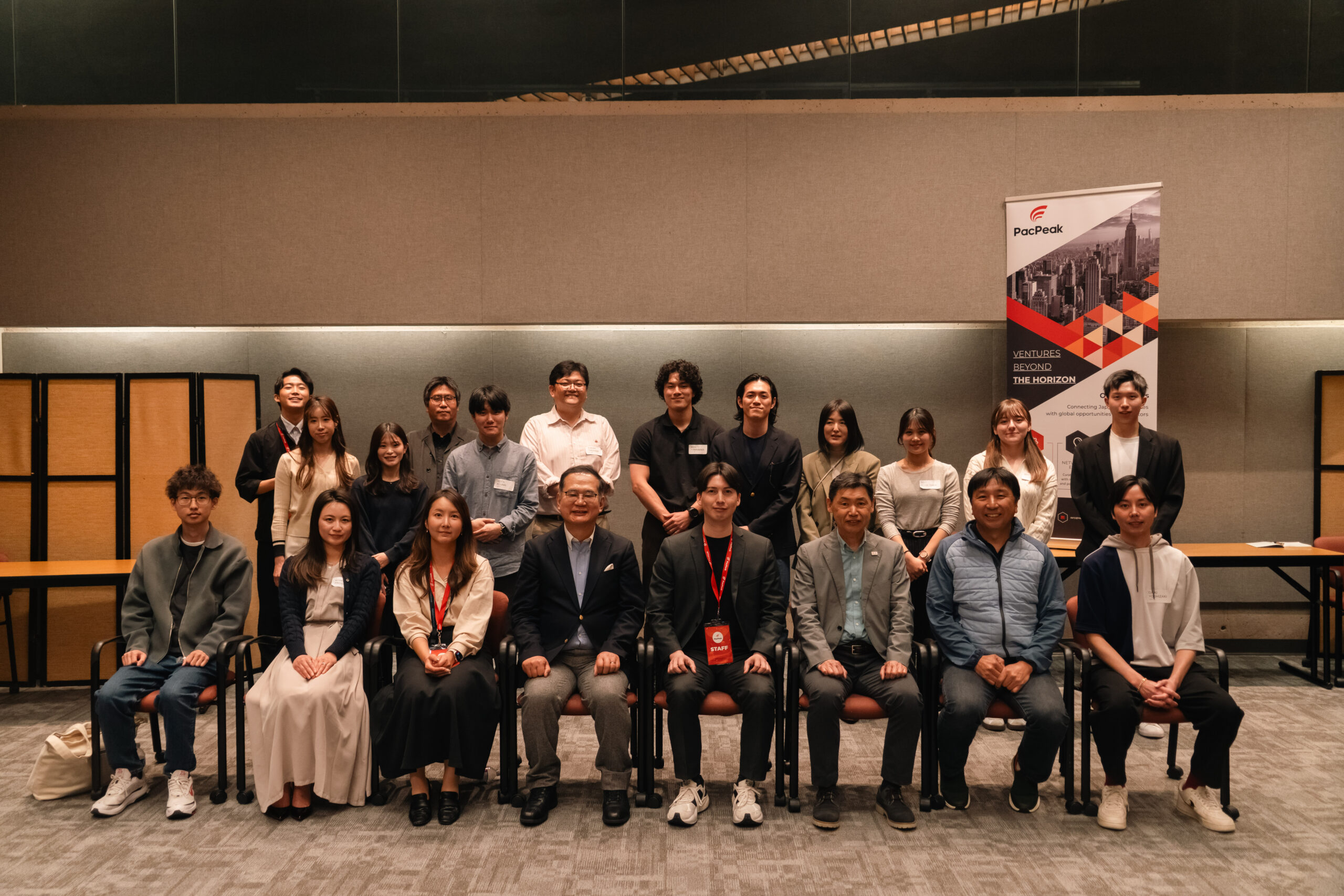
We believe that knowing about venture capitalists when launching a new business in Canada can enable a more dynamic and speedy start-up for entrepreneurs. Therefore, we invited a venture capitalist with extensive international experience and an outstanding track record to give a lecture, followed by a networking event.
The venue was filled with a diverse group of people, including entrepreneurs, company employees, students, and experts. The one-hour lecture and 30-minute Q&A session went significantly over the scheduled time. It was a lively session with a constant stream of questions from the participants.
Break free from the trap of short-term thinking.
"Now, more than ever, when the whole world is becoming inward-looking, a long-term perspective is crucial."
Professor Hasegawa analyzed the current global situation, citing the Trump administration's tariff policies as an example. He pointed out that the spread of social media has led to an increase in voters who only watch 15-second videos, and that politicians are only able to propose policies that will please them in the short term.
However, the professor asserted that "abandoning the benefits of trade that humanity has built up over thousands of years through short-term policies is a step backward." He urged business leaders to maintain long-term strategies.
The emergence of ChatGPT reverses the roles of "winners" and "losers."
The most attention-grabbing topic of the lecture was the dramatic changes in the work environment brought about by the evolution of AI.
"In 2020, people were saying that 'simple tasks would be taken over by AI,' but with the advent of ChatGPT, the opposite has happened."
According to Professor Hasegawa, the professions most likely to be replaced by AI right now are those requiring high education and high income—interpreters, mathematicians, financial analysts, and investment fund managers. On the other hand, jobs requiring manual labor or skilled craftsmanship are being "put on the back burner."
The professor described this change as "both a crisis and an opportunity." He emphasized that there are particularly great opportunities in fields where AI has not been widely used until now, such as agriculture, fisheries, and education.
What I learned about our "real competitors" during our visit to India
Professor Hasegawa, who visits India twice a year, shared his experiences in Bangalore, eliciting laughter from the audience while also offering insightful observations.
"India's geniuses were selected from 1.4 billion people, they all speak English, and their average age is 27. Plus, the cost of living is high, so they're working desperately hard."
The discussion also touched upon the high cost of living in Silicon Valley, with a one-room apartment costing 800,000 yen, and the resulting "desperation." A scathing comment was also made: "Japanese startups are too comfortable, in a way that's only halfway there."
A rare investor who can talk about his failures.
"Most university professors can only talk about success stories. But I can talk about 300 or 400 failure stories."
Professor Hasegawa's strength lies in his ability to openly discuss his experiences with the bankruptcy of companies he invested in. In his account of his failed investment in a ticket sales company, he explained in detail the lessons learned from his lax cash flow management.
When making investment decisions, I prioritize "human resource risk." I assert that the management's philosophy and ability to handle difficulties are what ultimately determine success or failure, more so than technology or marketing.
Canada and Japan should be able to get along better.
During the Q&A session, an interesting discussion unfolded regarding the startup environment in Canada.
"Canada has Nobel laureates in the field of AI, and is full of talented people. But they have far too little contact with Japanese investors."
Participants also shared specific data, such as "Investment from Canada to Japan is only 0.2%," highlighting the significant potential for economic exchange between the two countries.
Professor Hasegawa emphasized the importance of cooperation between the two countries, stating, "If we increase opportunities to get to know each other, great possibilities will surely open up." His remarks highlighted the crucial role of organizations like JCCOC.
This is a time of transformation, and therefore an opportunity.
To conclude his lecture, Professor Hasegawa encouraged the participants by saying, "These turbulent times present a great opportunity for young entrepreneurs who lack name recognition, money, and experience."
"Now, while the world as a whole hasn't yet noticed the changes, if we can effectively utilize this perception gap, good things should happen for everyone."
Active exchanges among participants continued during the networking session following the lectures. Amidst the rapid advancements in AI and digital transformation, it was a valuable and insightful evening that provided crucial guidance for the Japanese and Canadian business communities to work together to create new value.
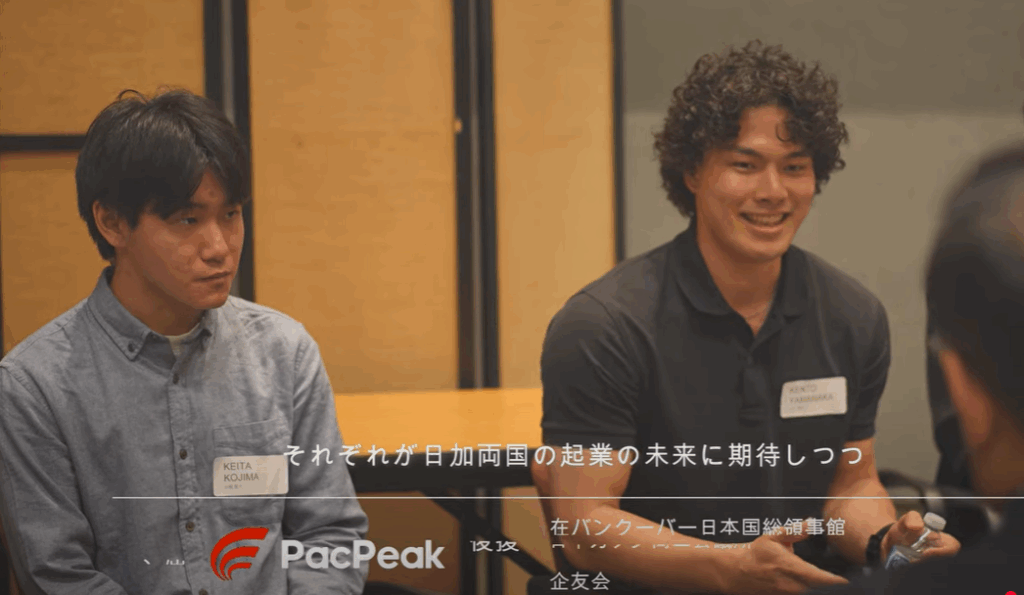
Organizer (Pacpeak) comment: We will create opportunities for young entrepreneurs to take center stage and shine. (1-minute video)
About the Japan-Canada Chamber of Commerce (JCCOC) Established in 2003, this Canadian government-approved non-profit organization contributes to promoting friendly relations between Japan and Canada through activities that connect the two countries in business, culture, education, and tourism. While valuing cooperation in a multicultural society, it continues to provide a platform for practical business exchange.