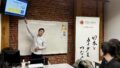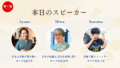
This is a report on the "Ocean Activities in Vancouver" event held last week on April 20th at the Japanese Canadian Centre.
~A perfect day presented by UBC exchange students: "Connecting the sea, culture, and people"~
This time, "Umi-katsu," an event promoting the exchange of fish culture between Japan and Canada, was planned primarily by eight exchange students from Japan currently enrolled at UBC (University of British Columbia), and was held at the Nikkei Centre.
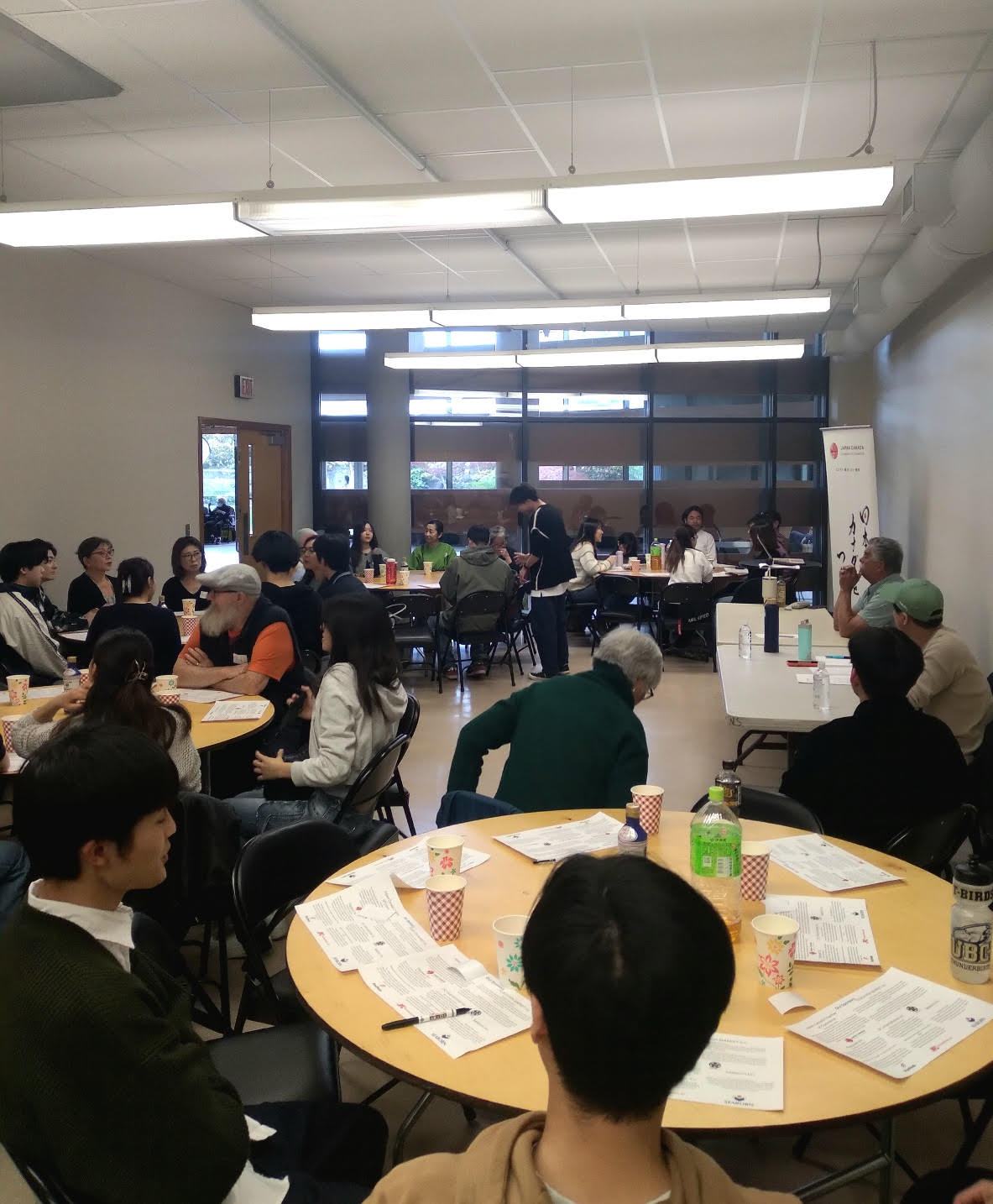
The venue was filled to capacity with 50 participants. The event began with greetings from the event organizers, followed by presentations from Takuya Hikita, CEO of Tsukiji Fish Market Co., Ltd., and Wilfred Wilson, an indigenous fisherman with 63 years of experience in British Columbia. They discussed the differences in fish-eating culture in Japan and Canada, as well as the differences in the fresh fish business in those countries.
The main differences between Japan and Canada are "whether or not raw fish is eaten" and "the basic principle is that fresh fish caught in a region is sold at the local fish market (local production for local consumption)" (Hikita).
"Fish are caught under government licenses and permits (protecting marine resources is fundamental)," says Wilson. In British Columbia, there are several businesses called Packers, and after catching fish in the sea, instead of auctioning them at the fish market, fishermen go to the Packer with the best offer and negotiate to sell.
We also had the opportunity to speak with Ryoma Hirano, the originator and representative of this event, about the background behind its creation.
Author K: "Why did you decide to hold an Umikatsu (sea activity) event?"
Hirano explained his motivation for undertaking this project, saying, "I didn't have the business skills for fresh fish, but I thought that by creating a place for exchange centered on fish culture through Umikatsu (Sea Activities), I could contribute to the local community."
Author K: "It's very interesting that you not only explored Japan's fish culture, but also invited Canadian First Nations to experience their local fish culture, isn't it?"
Hirano said, "During my studies abroad, I had a class where we learned about the First Nations issue in Canada. The sea where fresh fish are caught is still an important part of the First Nations' way of life and culture, as well as a vital source of work in the fishing industry. So I thought it would be interesting to have an opportunity to learn about the fisheries in Japan and Canada, and each other's fish-eating cultures."
In addition to Ms. Hirano, I also heard from other international students involved in organizing and running the event about their experiences studying in Vancouver and the various challenges they faced in making the event a reality. I was very impressed by how lively and enthusiastic everyone was at the venue.
After the discussion, the event concluded successfully with participants enjoying Japanese sashimi and indigenous fish products that had been prepared for the occasion.
~Looking back on the event, here are the comments of eight international students.~
Ryoma Hirano
"I believe that being able to generate new ideas from a youth perspective for the Japanese community, and then bring those ideas to fruition, is socially valuable, and I am genuinely very happy about it. I think I received a lot of help and forgiveness because of my youth, and I am still very much aware of my immaturity in those areas. I will continue to work hard so that I can one day repay the kindness of everyone who gave me this experience. Thank you so much for your support."
Tsuneo Hirukawa
"Looking back now that my ocean-related activities are over, there are still many challenges ahead, but I'm honestly happy that I was able to lay some kind of foundation for future exchange students. I would be truly grateful if, as a student, I was able to create intergenerational connections within the Japanese community and give back to Vancouver, which took such good care of me for eight months. Thank you very much to everyone who supported me."
Shuji Kosugi
"I was proud to be a part of a project led by exchange students that involved all generations. In particular, the fusion of the two perspectives of indigenous people and people of Japanese descent left a strong impression on me. There is still room for improvement, but I hope and look forward to seeing events like this continue into the future."
Shinji Shirato
"There are many things we could have done better, but I'm very happy that we were able to bring together such a diverse group of people and achieve, to a certain extent, our ambitious ideal of Japan, Canada, and Indigenous people getting to know each other through fishing!"
Yuta Sekine
"It was an honor to have the valuable experience of serving raw food at an event primarily run by university students. On the day of the event, we took the safety of the participants into the utmost consideration and were able to carry out thorough hygiene management until the very end. The tuna was particularly popular, and I was happy that many people came back for seconds. One area for improvement is that we were so meticulous with temperature control that it took much longer than expected to thaw the tuna. In the end, the thawing went well, but we hadn't considered at all what would happen if it didn't thaw completely, so if we hold another event, we need to be more thorough in that regard."
Misa Terazawa
"I had hoped to give back to the places where we had formed connections, but I feel that I learned even more from this experience. The joy of seeing our circle of friends expand because of something we created ourselves is something I will never forget. There were many shortcomings, but I am endlessly grateful for the interest shown by so many people and for their warm support."
Sara Nishiyabu
"Planning and organizing an event from scratch, primarily as international students, in Vancouver, far from Japan, has become a valuable and successful experience for me. We considered what we could do as students, and what we could do as Japanese people living in Vancouver, and held an event that only we could have done. I am incredibly grateful for the interest and support we received from so many people. There are many things we could have done better, but I hope that we can improve future events organized by international students."
Ayaka Hattori
"Considering the short preparation period of about two months, and the challenging circumstances of being an exchange student from Japan, I feel that being able to leave behind something tangible like this event was very meaningful. There were many shortcomings, such as insufficient English skills and lack of knowledge about the indigenous people's fish culture. I hope to use these lessons to pass on what we learned to future generations, or to help us grow in the future. On the day of the event, I was very pleased that about 40 people from diverse backgrounds participated. I would also like to express my gratitude to everyone who supported this event, including the three panelists and interpreters. And above all, I would like to express my special respect to my colleagues who walked together with me until the completion of the Marine Activity Project."
Our Chamber of Commerce will continue to support activities that arise from the independent thoughts and actions of young people.
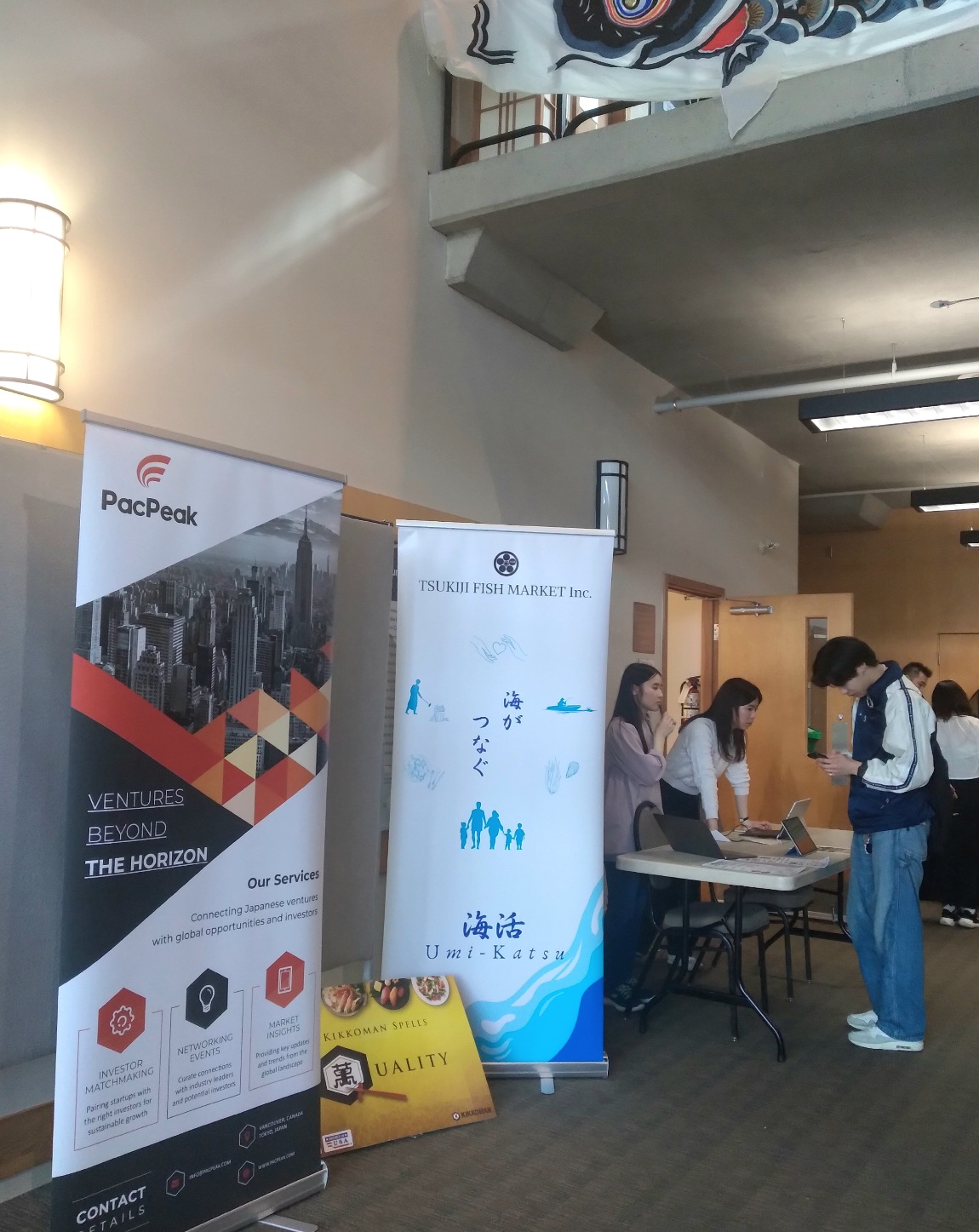
<Scenes from the venue on the day>

Seminar footage (video)